
Karryn’s Prison Screenshots









Karryn’s Prison review
Exploring the innovative mechanics and strategic elements of this unique management simulation
Karryn’s Prison stands out as a distinctive title that seamlessly blends multiple gameplay genres into a cohesive experience. This management simulation combines strategic decision-making with character progression systems, creating an engaging narrative where player choices directly impact the story’s direction. The game has garnered attention for its innovative approach to integrating narrative with mechanics, offering players a unique experience that goes beyond traditional genre boundaries. Whether you’re interested in understanding the core gameplay loop, exploring the character development system, or learning about the strategic elements that define the experience, this guide provides comprehensive insights into what makes this title noteworthy.
Core Gameplay Mechanics & Systems
Ever felt like you’re juggling chainsaws while riding a unicycle? 😅 Welcome to the warden’s office in Karryn’s Prison. At first glance, you might have certain… expectations, but what truly hooks you is the incredibly deep and demanding simulation lurking beneath the surface. This isn’t just a simple management sim; it’s a brutal, rewarding test of your ability to balance a dozen spinning plates that are all actively trying to shatter. The genius of Karryn’s Prison gameplay mechanics lies in how they fuse administrative strategy with intense personal stakes, creating a management simulation game where every click and command has weight.
You are not just managing a faceless institution. You are Karryn, a new warden thrust into command of a notoriously failing prison. Your success is her success, your failures are her failures, and every decision ripples through both the crumbling stone corridors and your own personal journey. This chapter dives into the core systems that make this game so uniquely gripping, from the foundational management loops to the profound player choice consequences that define every playthrough.
Understanding the Management Simulation Foundation 🏛️
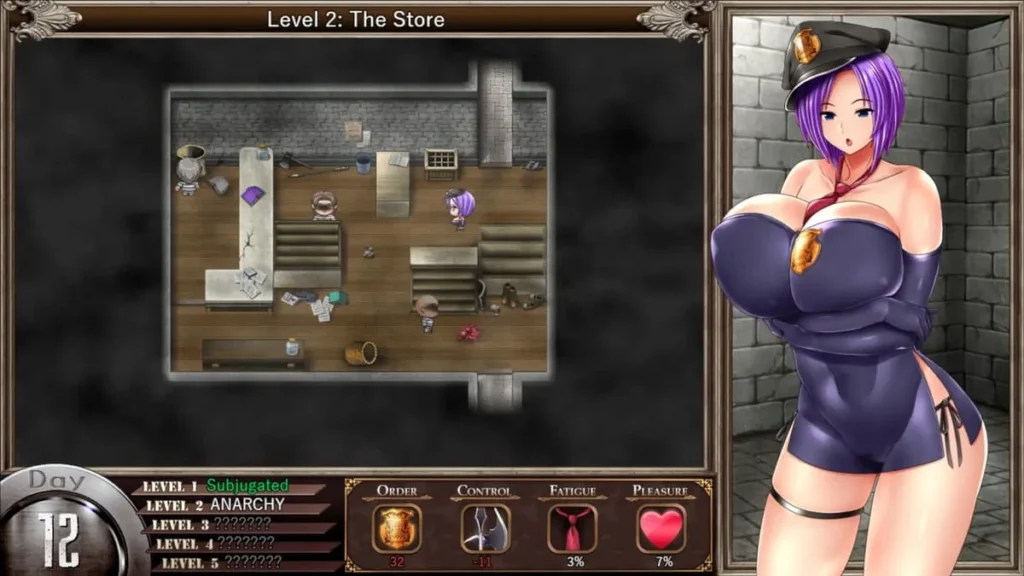
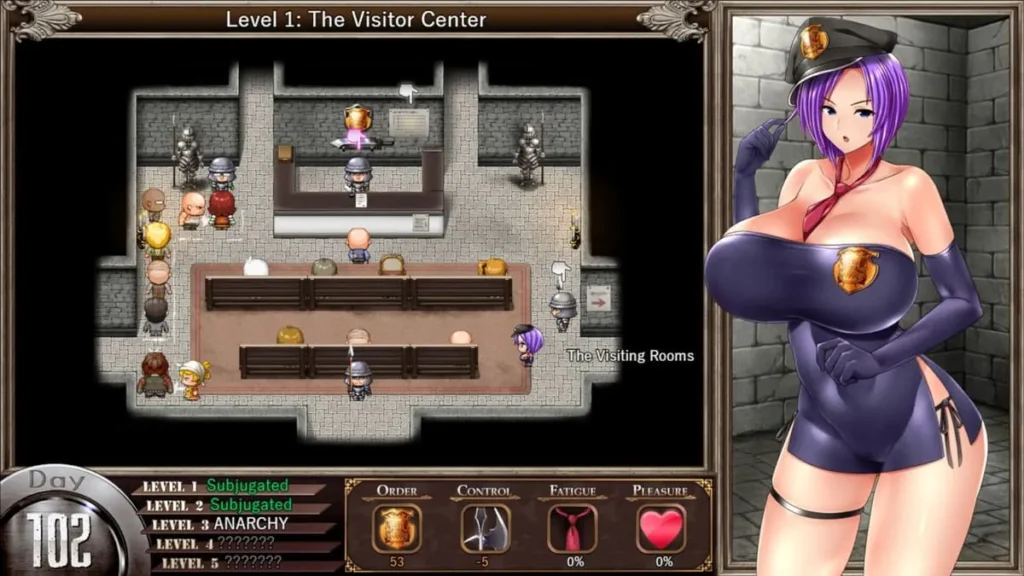
Forget everything you think you know about tidy, orderly prison sims. The foundation of Karryn’s Prison is built on beautiful, controlled chaos. Your primary lens into this world is Karryn’s computer terminal—a deceptively simple interface that is your command center for overseeing a facility on the brink of collapse. This is where the management simulation game aspects shine brightest and demand your constant attention.
Your daily duties are a multifaceted balancing act:
* Resource Management: You’ll juggle funds, allocate supplies for meals and facilities, and manage the prison’s labor force (the prisoners themselves). Underfund the kitchen, and you’ll have hangry riots on your hands. Overwork your labor details, and discontent will simmer.
* Prisoner Management: This is your core product and your biggest problem. You must assign inmates to cells, manage their daily schedules (work, meals, exercise, “rehabilitation”), and deal with their individual and collective moods. A prisoner’s obedience, stress, and respect levels are dynamic stats you must constantly monitor and influence.
* Facility Upkeep & Expansion: The prison starts in disrepair. You’ll need to clean rooms, repair broken walls and doors, and eventually expand by constructing new facilities like better security rooms, training areas, or specialized workshops. Every construction project costs money and time, forcing you to prioritize what you believe will stabilize your regime.
* Incident Response: Fights, escapes, protests, and… other forms of disobedience are constant threats. You’ll receive alerts and must choose how to respond—send guards, handle it personally, or perhaps let a minor incident go to focus on a bigger fire elsewhere.
The real hook is that you don’t manage this from a god-like perspective. You manage it as Karryn. A notification of a disturbance in the West Wing isn’t just a pop-up; it’s a direct demand on your time and energy. Do you stay at your desk to finalize a crucial budget report, or do you march down there to assert your authority personally? This seamless shift from macro-management to micro-interaction is the heart of the Karryn’s Prison gameplay mechanics. You’re never just an administrator; you’re a leader on the ground, and the simulation is designed to constantly pull you in multiple directions.
Pro Tip: Early on, I learned the hard way that ignoring small incidents to focus on “big picture” finances is a trap. 🔥 That small fight in the dorm can snowball into a full-block riot if not addressed, wiping out any economic gains you just made. The simulation constantly teaches you that every element is interconnected.
Character Progression and Development Systems 📈
While you’re managing the prison, you’re also managing Karryn. This is where the brilliant RPG mechanics integration elevates the game from a good sim to a legendary one. Karryn isn’t a static avatar; she has her own stats, skills, traits, and equipment that develop entirely based on your actions. The character progression system is a dual-track marvel, deeply tied to the game progression system.
Karryn grows through direct experience and training. If you have her break up fights personally, her Strength might increase. If you spend time studying reports and managing complex schedules, her Intelligence grows. This creates a beautiful feedback loop: the way you choose to solve problems directly shapes the tools you have available to solve future, bigger problems. It’s a character progression system that feels organic and deeply personal.
Your primary tools for development are:
* Stat Growth: Core attributes like Strength, Charisma, and Intelligence improve through use.
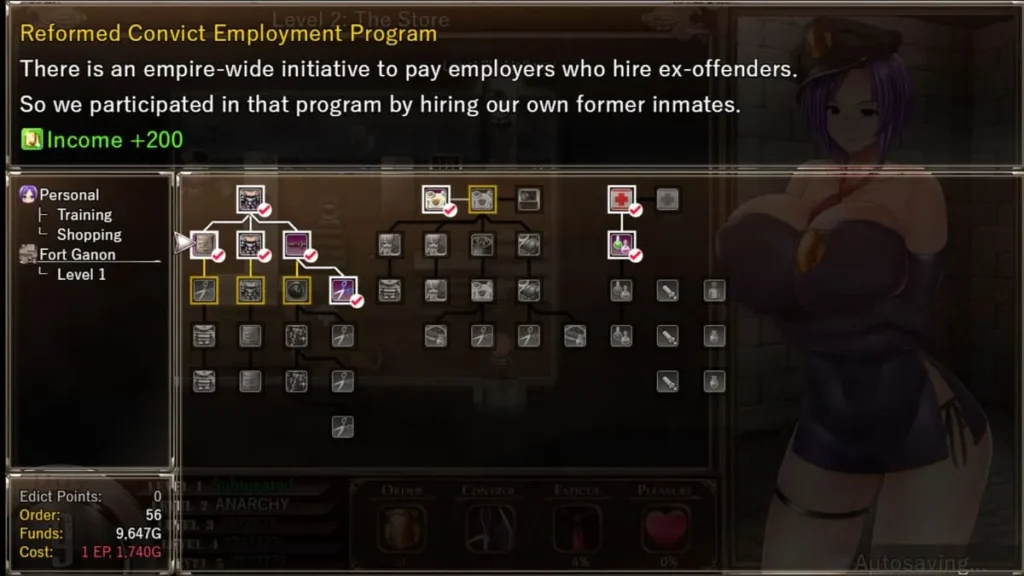
* Skill Trees: You’ll unlock and upgrade abilities in distinct trees, often choosing between paths that favor authority and intimidation or persuasion and reform. Do you invest in “Commanding Presence” to cow inmates into obedience, or “Diplomatic Speech” to talk them down?
* Equipment & Gear: Outfits and items aren’t cosmetic; they provide stat bonuses and unlock new interaction options. Choosing your gear each morning is a strategic decision in itself.
* Traits & Flaws: As you play, Karryn can permanently gain positive traits or negative flaws based on repeated actions or specific events. Becoming known as a “Brutal Warden” or a “Compassionate Leader” opens and closes different narrative and gameplay paths.
To visualize how these systems intertwine, let’s look at how different management styles feed into Karryn’s personal growth:
| Management Focus | Primary Actions | Karryn’s Likely Progression | Long-term Prison Impact |
|---|---|---|---|
| Authoritarian Control | Frequent punishments, suppressing riots by force, maximizing prisoner labor. | High Strength/Stamina, skills in intimidation and guard command. May gain flaws like “Feared” or “Merciless”. | High short-term obedience, but breeds deep-seated resentment and potential for large-scale, violent uprisings. |
| Reform & Rehabilitation | Investing in education programs, using persuasion, fulfilling prisoner requests. | High Intelligence/Charisma, skills in negotiation and counseling. May gain traits like “Respected” or “Empathetic”. | Slower, more unstable obedience that can grow into genuine loyalty. Lower productivity, higher long-term stability. |
| Neglect & Corruption | Ignoring incidents, accepting bribes, cutting corners on resources. | Unbalanced stat growth, skills focused on subterfuge and wealth accumulation. Likely to gain flaws like “Greedy” or “Lazy”. | Rapid facility decay, extreme prisoner autonomy, and a prison that operates as a chaotic black market under a veneer of control. |
This table shows there’s no “right” way to play. Your approach to the management simulation game directly writes the story of who Karryn becomes. The game progression system is not about reaching an ending, but about living with the compounded results of hundreds of small development choices. Will you create an unstoppable disciplinary powerhouse, or a shrewd, silver-tongued manipulator? The RPG mechanics integration ensures that answer is unique to you.
Strategic Decision-Making and Consequences ⚖️
This is where Karryn’s Prison truly separates itself from the pack. Every mechanic discussed so far feeds into a breathtaking web of strategic decision making. Nothing happens in a vacuum. A choice made in Week 1 will echo in Week 10, often in ways you could never have perfectly predicted. Understanding this cause-and-effect chain is the game’s highest skill ceiling.
The player choice consequences are both immediate and glacial. A quick example: early on, you’re introduced to a particularly troublesome inmate. You have a few options: throw her in solitary confinement to make an example, assign her to brutal manual labor to break her spirit, or spend your own valuable time to speak with her and understand her grievances.
- Choice A (Solitary): You quickly restore order to the block and gain a temporary boost to obedience from other prisoners who witnessed it. However, that inmate returns angrier and more skilled at causing trouble. You’ve solved today’s problem but created a more formidable nemesis for tomorrow.
- Choice B (Brutal Labor): You generate extra resources from her work and weaken her physically. But other prisoners see this, and the overall stress level of the population rises incrementally, making future incidents more likely.
- Choice C (Talk it Out): You lose a significant chunk of your day and see no immediate change. However, you might learn she’s causing trouble because of a lack of basic supplies. Addressing that root cause could not only pacify her but improve the mood of her entire friend group, preventing a dozen future incidents. You traded short-term efficiency for long-term stability.
This is a microcosm of the game’s philosophy. Strategic decision making isn’t about finding the “best” option; it’s about choosing the option that best aligns with your evolving long-term strategy for both the prison and Karryn herself. Do you need quick cash now to build an essential security room, even if it means exploiting prisoners? Or can you afford to play the long, kinder game?
The consequences cascade:
1. Staff Loyalty: How you treat your guards affects their efficiency and willingness to follow dangerous orders.
2. Prisoner Hierarchy: Powerful inmate leaders will emerge. You can crush them, co-opt them, or ignore them, each choice reshaping the social power structure of your prison.
3. Narrative Branches: Major story events and endings are locked behind the reputation and traits you’ve accumulated. The world and its characters react to the warden you’ve built.
The satisfaction comes from seeing this complex machine you’ve built—through thousands of decisions big and small—actually function (or spectacularly fail). When a major crisis hits and the systems you put in place, combined with the specific skills you trained in Karryn, allow you to navigate it, the feeling is unparalleled. You didn’t just follow a guide; you authored the strategy yourself, and the game respects that authorship by delivering meaningful, consequential outcomes.
Ultimately, the core Karryn’s Prison gameplay mechanics form a symphony of interconnected systems. The management simulation game provides the stressful, engaging stage. The character progression system and RPG mechanics integration give you a unique instrument to play. And the framework of strategic decision making and player choice consequences writes the music, a song that is different every single time you choose to step into the warden’s boots. It’s a masterclass in how deep, responsive systems can create profoundly personal stories of triumph, failure, and relentless challenge. 🎮
Karryn’s Prison demonstrates how thoughtful game design can create a memorable experience by interweaving narrative, mechanics, and player agency into a cohesive whole. The game’s strength lies in its ability to make player choices feel consequential, with the story and character development directly reflecting the decisions made throughout gameplay. From its innovative integration of multiple gameplay systems to its polished presentation, the title offers a distinctive experience that appeals to players seeking meaningful interactive storytelling. The combination of strategic decision-making, character progression, and narrative consequences creates an engaging experience that encourages multiple playthroughs to explore different story paths. For players interested in games where mechanics serve the narrative and choices genuinely matter, Karryn’s Prison represents a compelling example of modern game design that respects player agency while delivering a satisfying and complete experience.