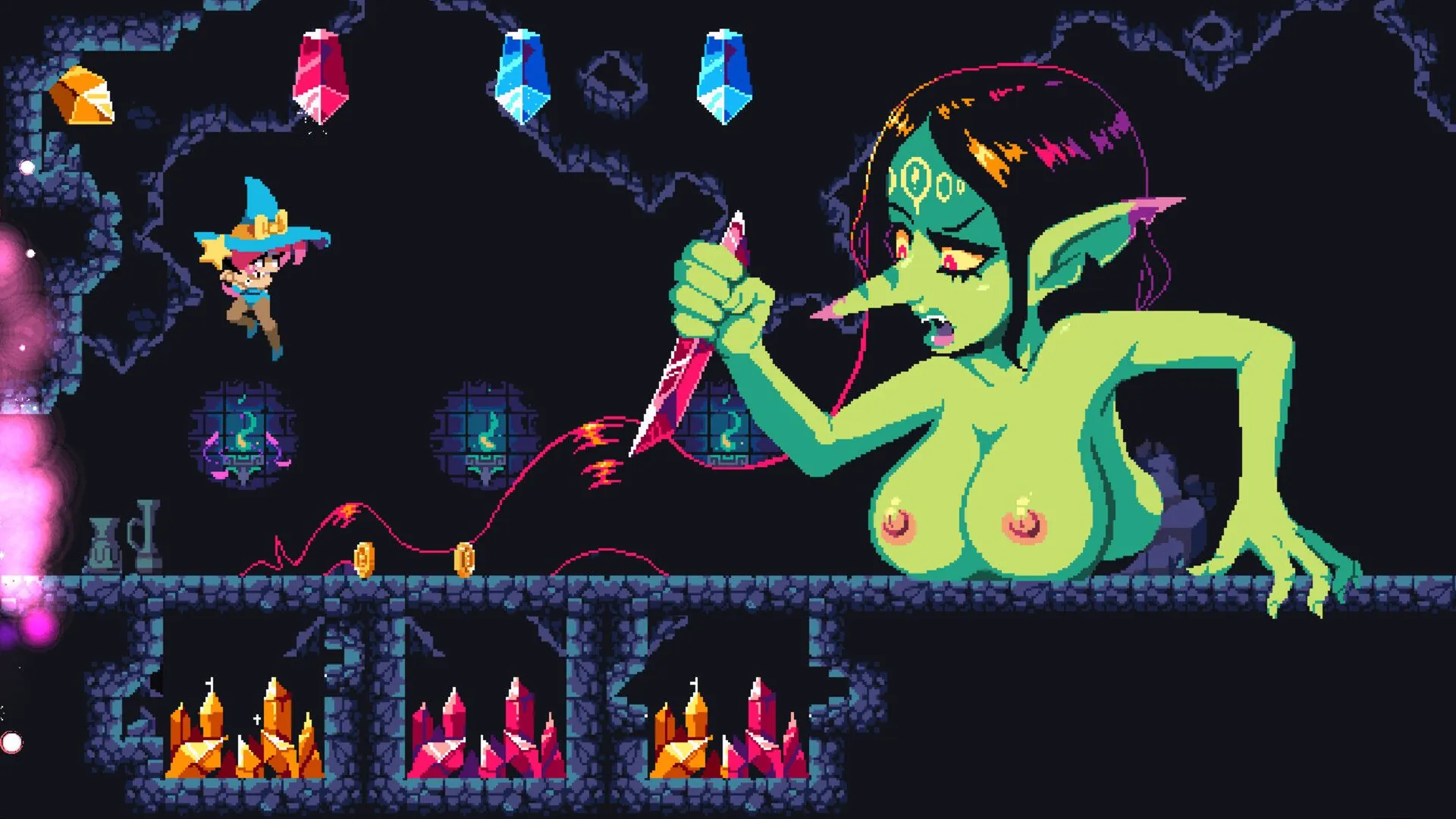
My New Neighbors
Play My New Neighbors
My New Neighbors Screenshots






My New Neighbors review
Discover the dark secrets and character corruption mechanics in My New Neighbors
Have you heard about My New Neighbors? This unique game dives deep into the world of character corruption, offering players a thrilling experience unlike any other. In My New Neighbors, you’ll uncover hidden secrets, manipulate relationships, and raise corruption levels for various characters. Whether you’re a fan of psychological thrillers or strategic gameplay, My New Neighbors delivers an immersive journey filled with suspense and moral dilemmas. Let’s explore what makes this game stand out in the crowded gaming landscape.
Understanding My New Neighbors Corruption Mechanics
Just as you’re unlocking your front door and catching a whiff of freshly baked bread from next door, a strange thought crosses your mind: what if I knew exactly what makes my neighbors tick? My New Neighbors isn’t just about moving into a new house; it’s a deep dive into human psychology, wrapped in a layer of moral ambiguity. I remember my first week in game, thinking I could just make friends. Then I hit a wall in the story. To progress, I needed leverage, which is where the My New Neighbors corruption system enters the picture.
How Corruption Levels Work in My New Neighbors
Think of corruption mechanics My New Neighbors as a hidden scoreboard for each character. It’s not visible on the main HUD, but it dictates everything. Every character starts with a base Corruption Level, usually very low (near zero). The higher this number climbs, the more you unlock their darker impulses, hidden agendas, and secret dialogue options.
The number itself is a sliding scale from 0 to 100. At 0, a character is essentially “pure” in the game’s context. They follow the rules, stick to their scripted schedule, and only offer surface-level interactions. As you raise corruption levels My New Neighbors, you essentially chip away at their moral compass. At 50, they start confiding in you, revealing secrets that put them at risk. At 80, they are willing to break rules, lie to other characters, and even commit minor crimes on your behalf. At 100, you have achieved total influence. They are, for all intents and purposes, entirely under your thumb.
A key tip I learned the hard way: raising corruption too fast on one character
can alert other neighbors. They start gossiping, and suddenly everyone becomes
harder to My New Neighbors character manipulation because they are on
guard.
Here is a quick look at a few characters I encountered and their baseline tendencies.
| Character Name | Base Corruption Level | Primary Method to Increase Corruption |
|---|---|---|
| Mrs. Hawthorne | 10 | Gift giving (expensive items) / Eavesdropping on her phone calls |
| Mr. Blake | 5 | Financial pressure (lending money / gambling) / Flattery |
| Jasper (The Gardener) | 25 | Supplying contraband / Blackmail regarding his past |
| Lily (Landlord’s Daughter) | 40 | Romantic manipulation / Spreading rumors about her father |
This is not a simple friendship meter. It’s a tool for My New Neighbors character manipulation, and using it correctly is the difference between seeing one ending and seeing the full, dark story.
Raising Corruption for Characters in My New Neighbors
How do you actually raise corruption levels My New Neighbors? It is not a single action. It is a campaign. I remember my first attempt with Mrs. Hawthorne. I brought her a pie. Nothing. I complimented her garden. Nothing. I had to find her weakness: a specific letter she kept hidden in her house.
There are a few reliable paths to progress your My New Neighbors corruption guide.
1. The Gift of Greed 🎁
Almost every character has a “lust.” For some, it is money. For others, it is rare artifacts. The game does not tell you what it is. You have to snoop through their mail, read their journals, and listen to their gossip. Once you figure it out, giving them that specific item is a massive corruption boost.
2. The Secret Keeper 🤫
This is my favorite method. When you discover a character’s secret (infidelity, a hidden debt, a criminal past), you have a choice. You can use it immediately to My New Neighbors character manipulation.
– White option: You offer to keep the secret in exchange for a small favor.
– Gray option: You threaten to expose the secret unless they do something big.
– Dark option: You tell them that the only way to protect the secret is for them to corrupt someone else.
The path you choose determines the speed of the corruption. Threatening them is faster but risky. Offering to protect them is slower but builds “trust” which lowers their suspicion.
3. The Environment of Decay 🏚️
This is a subtle mechanic. The state of your own house and behavior influences the neighborhood. If you neglect your property, stay up all night, or have “shady” visitors, it lowers the overall “morale” of the block. This makes every neighbor slightly easier to raise corruption levels My New Neighbors because they feel the environment is already decaying. It’s a passive bonus.
Why Corruption Matters in My New Neighbors Gameplay
Why go through all this trouble? Because My New Neighbors gameplay corruption is the gatekeeper to the best content. The vanilla “nice neighbor” path is short and predictable. It is like taking a tank to kill a fly. It finishes the story, but it leaves you bored.
character corruption My New Neighbors matters because it unlocks narrative branches.
– Low Corruption: You get the standard plot. You move in, you say hello, you move out. Yawn.
– Medium Corruption: You start to see the cracks in the facade. Characters start arguing. The town’s secret society starts to notice you. You get invited to “special” meetings.
– High Corruption: The story becomes a thriller. You are not just a neighbor; you are a puppet master. You can turn characters against each other. You can cover up crimes. You can force someone to leave town.
The moral complexity of My New Neighbors lies in the fact that there is no right answer. Sure, you can My New Neighbors character manipulation to get the secret vault code. But will you be able to live with the consequences when the family you destroyed moves away and you are left alone? I found that the game’s narrative is far more rewarding when you embrace the grey area. You don’t have to be a monster. But you also don’t have to be a saint.
The strategic choice is simple: Do you want a smooth, boring life, or do you want a story with teeth? My New Neighbors corruption gives you that choice. It allows you to turn a simple suburb into a chess board. Every conversation is a move. Every gift is a gambit. And the final payoff is a story that feels earned, even if it feels dirty.
If you are stuck on a story beat, stop trying to be nice. Start My New Neighbors character manipulation. Dig up the dirt. Buy the right gifts. Watch the neighborhood shift around you. It is the most satisfying path through the game, and it guarantees that you will never look at your own neighbors the same way again.
My New Neighbors offers a compelling experience centered around character corruption and moral complexity. By mastering the corruption mechanics, you can unlock deeper story layers and influence character behavior in meaningful ways. Whether you’re raising corruption levels for strategic advantage or exploring the psychological depth of the game, My New Neighbors delivers an unforgettable journey. Ready to dive into the dark world of My New Neighbors? Start your corruption adventure today and see where the secrets lead.